Quality Tags Deep Dive
Deep analysis of masterpiece, best_quality, 8k and similar quality tags — their real effect and how different models respond.
1. What quality tags actually do
Quality tags (masterpiece, best_quality, 8k, highres) are among the most misunderstood tokens in prompt writing. They do not increase the output resolution — Stable Diffusion outputs whatever size you pass to the sampler. What they actually do is bias the model toward examples in its training data that were labeled as high-quality, professional, or detailed. In the Booru-trained family (NovelAI, Animagine, Pony), these tags are literal: thousands of training images have the word masterpiece in their caption, so including it shifts you toward that cluster.
On SDXL base and Flux, the effect is weaker and sometimes counterproductive — these models were trained on a mix of photos, illustrations, and text, so masterpiece pulls you toward paintings and away from photographic realism. If your goal is a photo, prefer camera vocabulary (85mm lens, Kodak Portra 400) over quality tags.
Measured on this site
The size of that bias is easy to overestimate. We rendered the same prompt four times on rinFlanimeIllustrious v3.0 at a fixed seed, changing only the quality tokens — worst quality, then masterpiece, then longer stacks — with the quality vocabulary removed from the negative so nothing cancelled out. The four frames are nearly indistinguishable, and worst quality in the positive prompt did not visibly degrade anything. Measured against a noise floor set by nonsense tokens, every quality tag in this category moved the image less than a random token did.
Read that as a ceiling on what these tokens buy you on a strong modern anime checkpoint with an otherwise well-formed prompt — not as proof they never matter. On weaker or older checkpoints, and at low step counts, the same tokens carry more. Spend your prompt budget on subject, framing and lighting first.
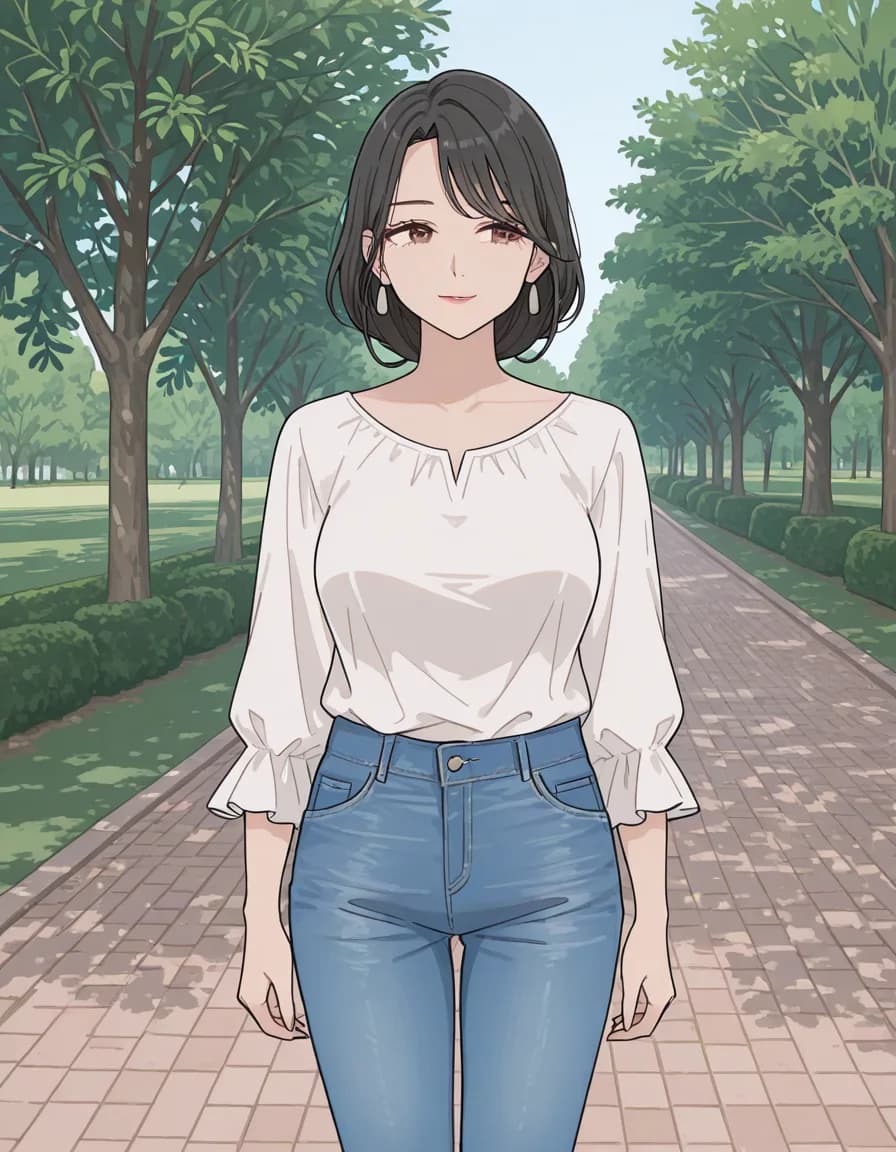
worst qualityThe opposite end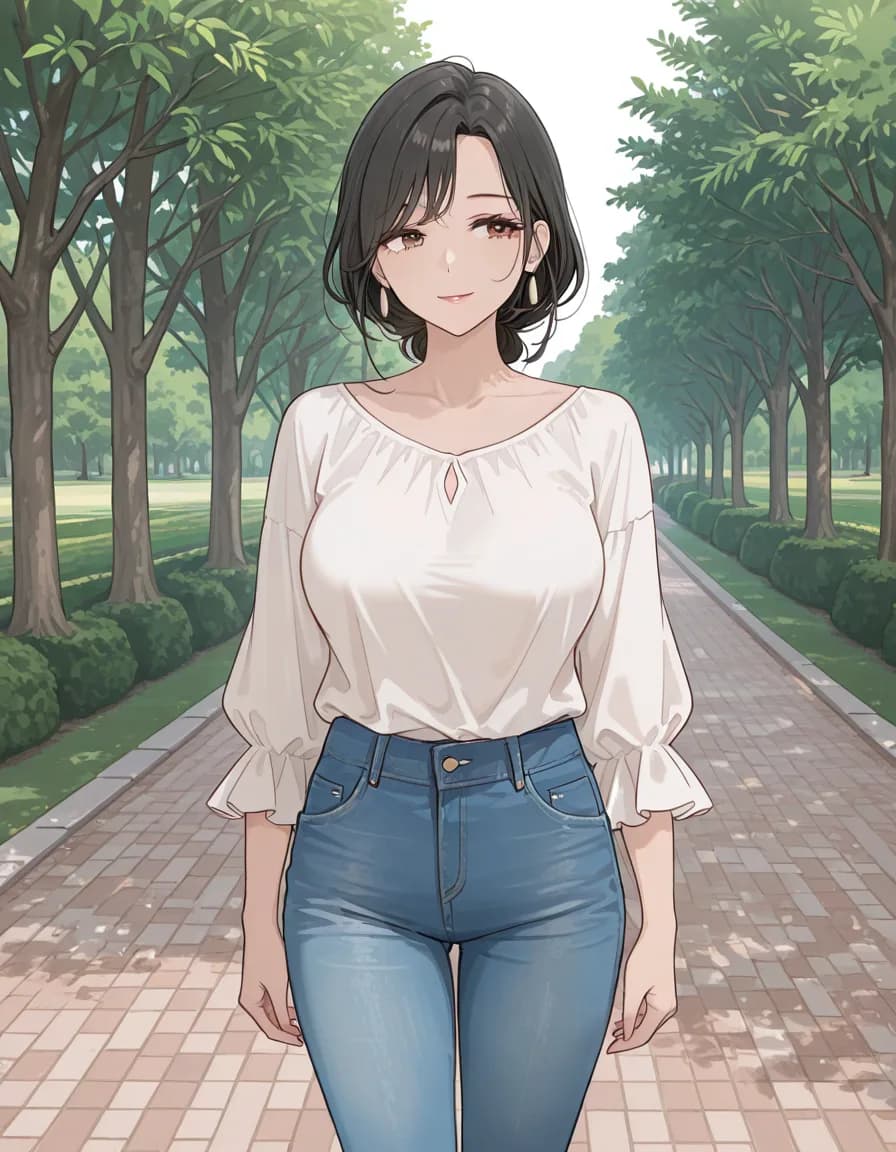
masterpieceOne token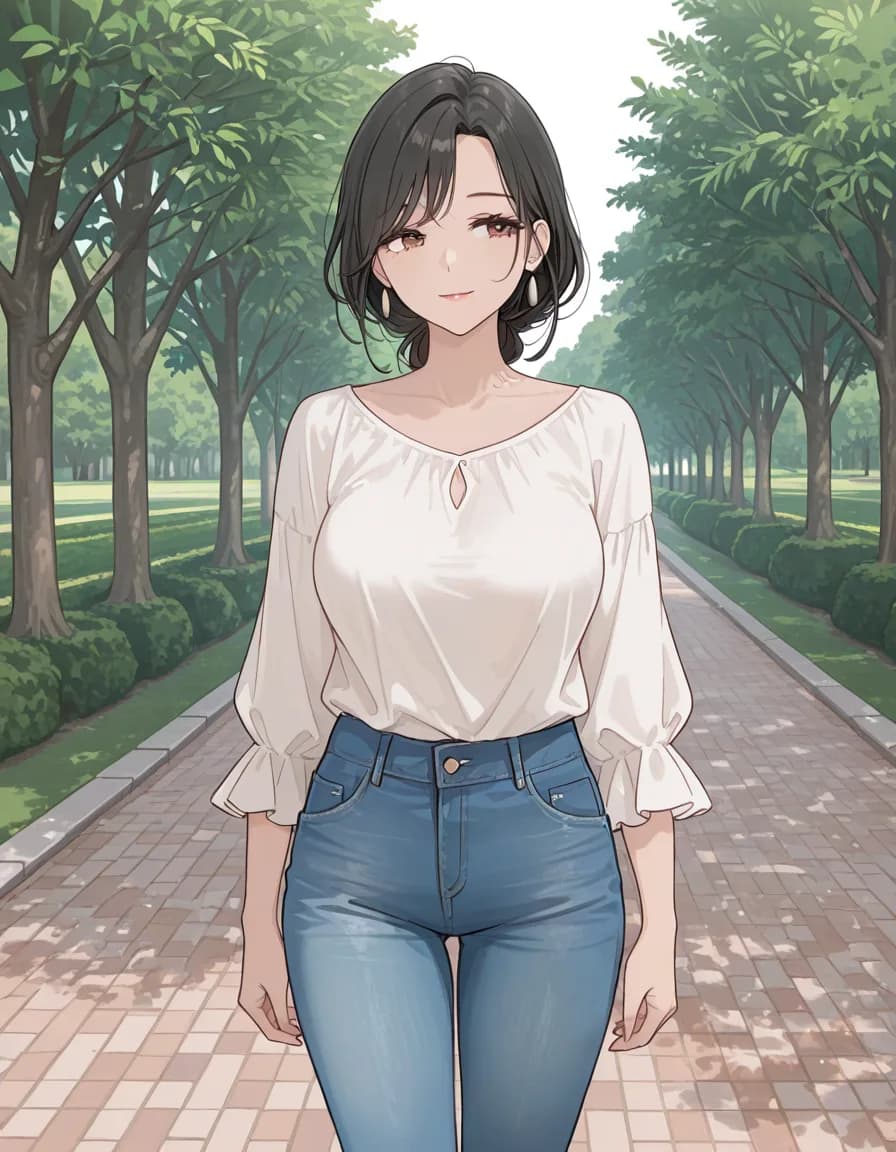
masterpiece, best qualityTwo tokens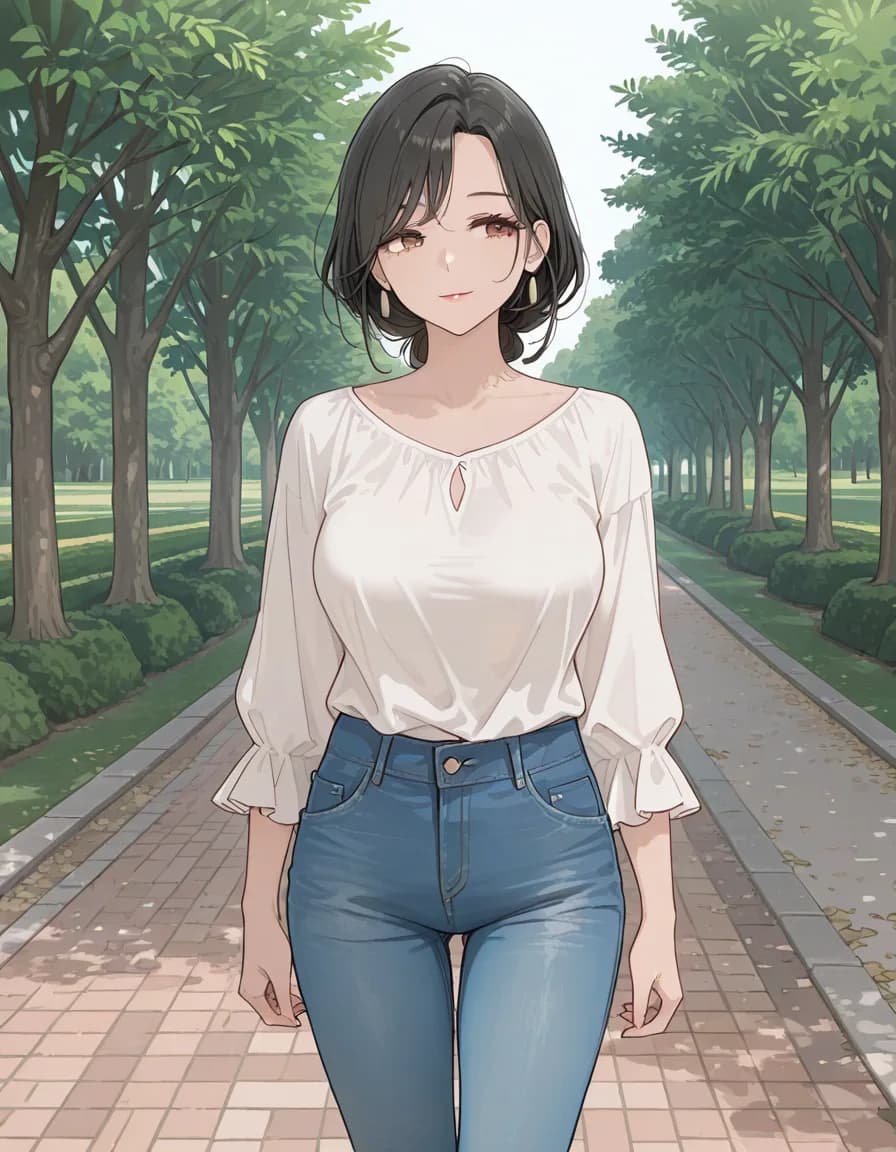
masterpiece, best quality, amazing quality, very awaFour (full stack)Shared prompt
1girl, solo, mature female, adult woman, short black hair, brown eyes, white blouse, blue jeans, standing, park path, <tag slot>
Negative prompt
school uniform, pleated skirt, blazer, serafuku, child, loli, teenage, censor, watermark, signature, text, extra limbs, bad hands, bad anatomy
Model
rinFlanimeIllustrious_v30 · euler_ancestral/normal · steps 28 · CFG 5 · 896×1152 · seed 777003
This comparison was measured on a single Stable Diffusion family checkpoint. The same tags can behave differently on NovelAI, Midjourney or another checkpoint — read it as a reference point, not a verdict.
2. The five canonical quality tokens
masterpieceStrong bias on anime/illustration models. Near-mandatory on NovelAI and Pony. On SDXL, use sparingly — it can overfit to gallery-style paintings.
best_quality / amazing_qualityComplements masterpiece. Stack both at the front of your prompt on anime checkpoints. No measurable effect on Midjourney (which ignores inline quality tags in favor of its --style flag).
8k / 4kResolution hints. Meaningless on the output size itself, but shift toward training images labeled as high-res — so they tend to push toward sharper textures and more micro-detail.
highres / high_resolutionBooru label token — on NovelAI/Animagine it is nearly a synonym for the highest-effort tag. On SDXL, not a strong cue.
super_detail / intricate_detailsForces the model to fill surfaces with detail — good for armor, machinery, foliage. Overuse produces busy, AI-generated-looking textures.
🎨 Composition — Tag examples
masterpiece — Masterpiece
3. Recommended stacking order
The order of tokens affects attention weight on all current SD-family models (earlier tokens carry more weight), so if you use quality tags at all, put them first. Stacking more of them is a different question — our own comparison above found no visible gain from lengthening the stack, so treat steps 1 and 2 below as a cheap convention rather than a lever worth tuning. The order that actually pays is everything from step 3 down:
masterpiece, best_quality— global baseline8k, highres— resolution bias- Style tag (
photorealistic,anime style) - Subject tags (
1girl, solo) - Description tags (appearance, pose, expression)
- Setting tags (background, lighting, colors)
- Camera/renderer cues (
85mm, f/1.8)
4. Model-specific behavior
| Model | masterpiece | 8k | Note |
|---|---|---|---|
| NovelAI v3 | Strong | Weak | Use masterpiece, best quality — their docs recommend it |
| Animagine XL | Very strong | Medium | Remove if going for a rougher sketch style |
| Pony Diffusion V6 | Strong | Medium | Use the score_9, score_8_up system instead in practice |
| SDXL base | Medium | Weak | Can push toward painting when you want photo |
| Flux.1-dev | Weak | Weak | Flux is natural-language — write sentences, skip quality tokens |
| Midjourney v6 | Ignored | Ignored | Use --style raw, --stylize, --quality |
5. Myths and mistakes
- Myth: Stacking more quality tags always helps. —Reality: Past three or four, additional tags dilute attention and can cause attribute leakage (quality traits bleeding into subject tokens).
- Myth:
8kforces 8K resolution. — Reality: Output resolution is the sampler's parameter.8konly biases toward training captions. - Myth:
absurdresorhigh_detail_faceguarantee fidelity. —Reality: They help on models trained on those labels, otherwise they're noise. - Mistake: Quality tags in the negative prompt (
low quality, worst quality, blurry) are underused. They often matter more than positive quality tags.
6. Quality tag recipes
Anime (NovelAI / Animagine)
masterpiece, best_quality, amazing_quality, very aesthetic, absurdres
Photorealism (SDXL / Flux)
photorealistic, 8k, detailed skin texture, sharp focus, high dynamic range
Notice: no masterpiece. Rely on camera cues instead.
Pony V6
score_9, score_8_up, score_7_up, masterpiece, best_quality
Negative (universal)
low quality, worst quality, blurry, jpeg artifacts, deformed, extra fingers, watermark, text
7. FAQ
Q. Do I need all five canonical tokens?
A. No. Two to three are usually enough. Stacking more dilutes attention.
Q. Should I use quality tags in the negative prompt?
A. Yes. low quality, worst quality, blurry is one of the single most effective negative snippets.
Q. Does this apply to video models (Sora, Veo)?
A. Less so. Video models are more natural-language-oriented. Describe the scene in sentences.
Q. What about Danbooru-style tags?
A. Underscores vs spaces depend on the checkpoint. NovelAI prefers spaces, older Animagine prefers underscores. Check your model's docs.
관련 자료: 프롬프트 기초 · 네거티브 가이드 · Composition 태그 · 프롬프트 예시 15선