Traditional dress
Does it know these garments structurally, or only by association?
Traditional garments have fixed rules — which way they close, where the sash sits, how the collar is cut. Following those rules is the test.
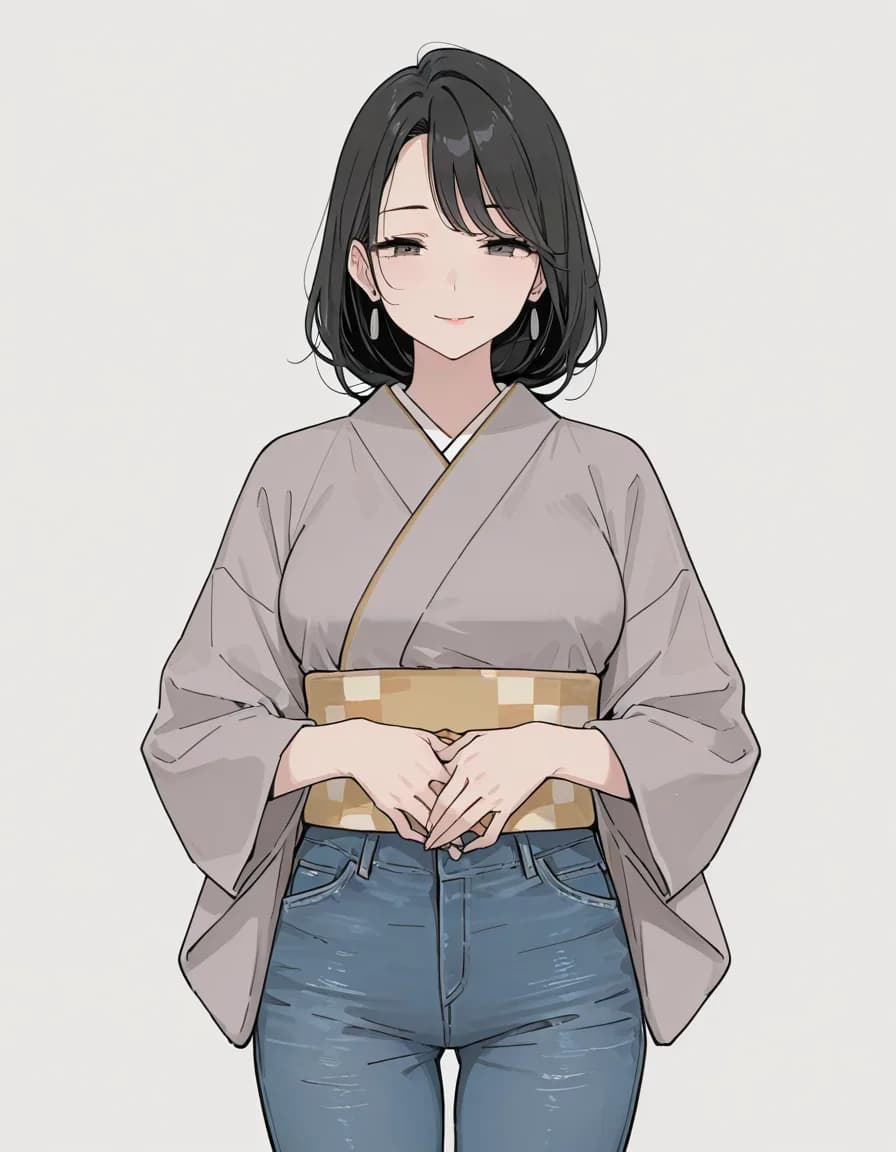
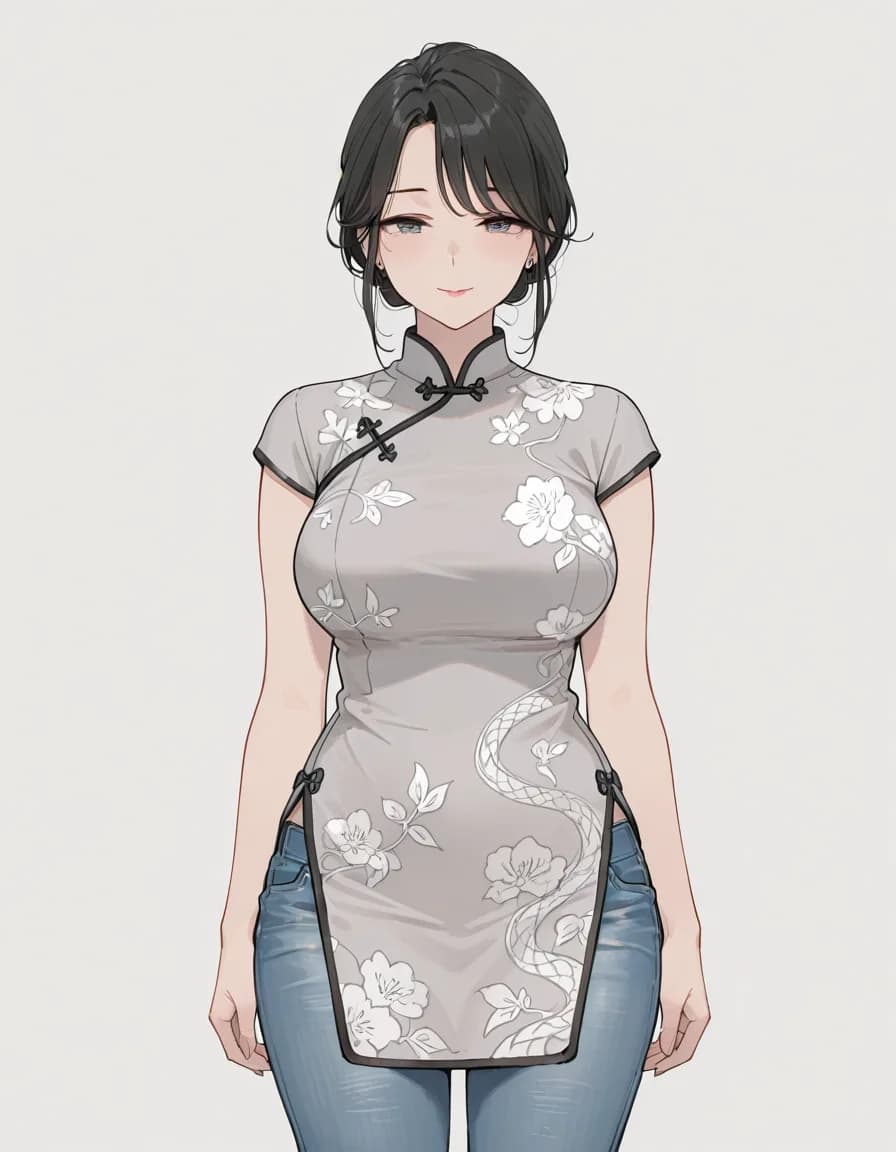
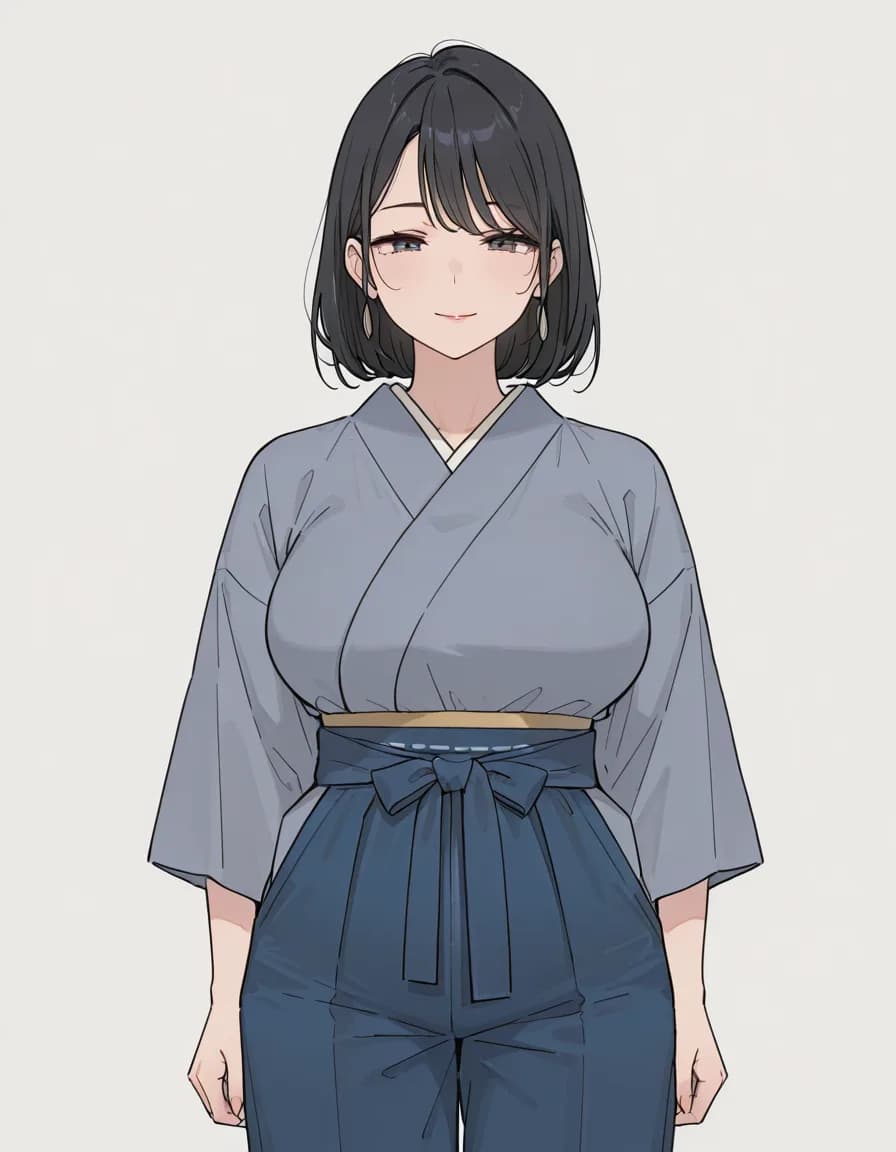
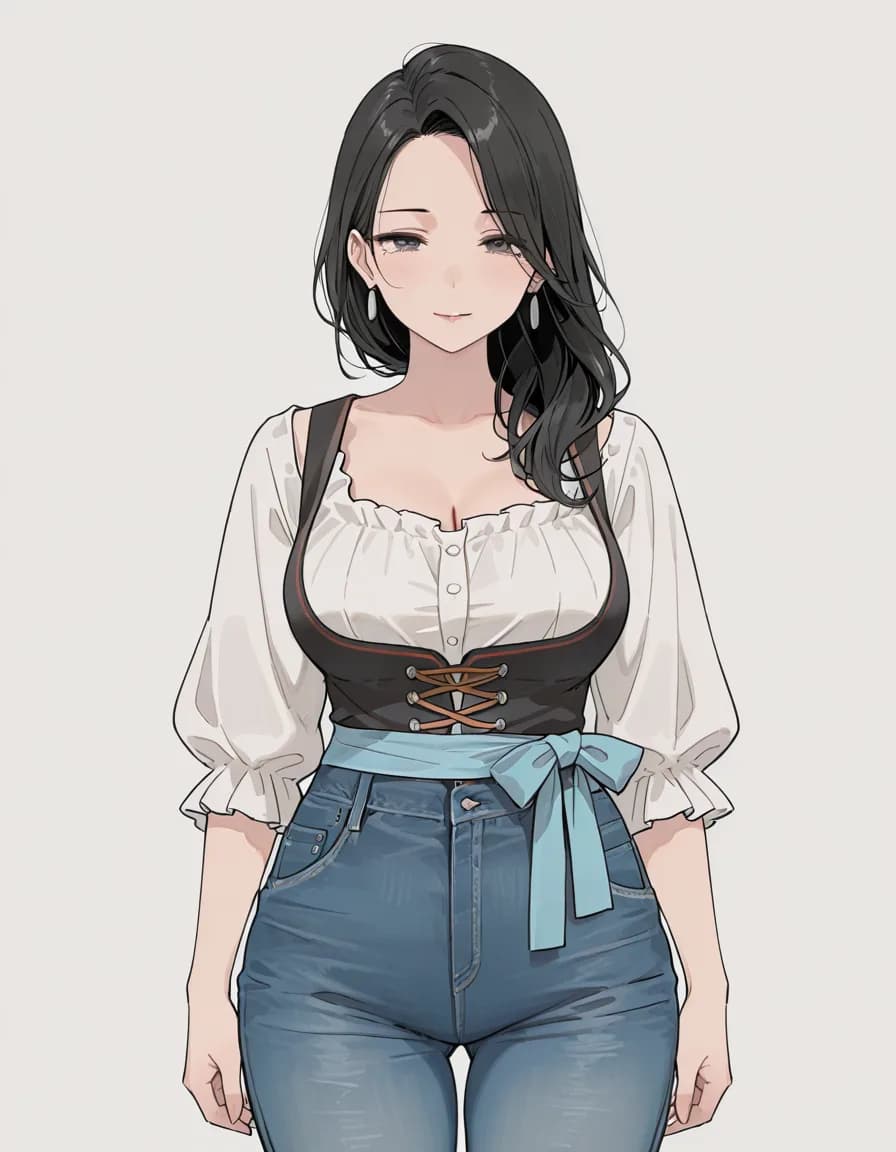
Every cut below shares one seed, one base prompt and one sampler setting, and differs only by the tag marked in amber.
What each cut shows
kimono- Crossed front and a wide obi, with the sleeve width right too.
china dress- Mandarin collar, frog fastenings and the side slit — all three parts of a qipao.
hakama- Pleated trousers and waist ties, with a kimono-style top arriving alongside.
dirndl- Laced bodice and puffed-sleeve blouse arrive, but no skirt or apron: jeans below, with only a pale blue sash bow at the waist.
How these were made
Shared prompt
masterpiece, best quality, amazing quality, very awa, 1girl, solo, mature female, adult woman, short black hair, blue jeans, cowboy shot, straight-on, plain grey background, <tag slot>
Tap a tag to carry it over to the builder
Negative prompt
nsfw, nude, topless, bikini, swimsuit, lingerie, underwear, cleavage, suggestive, school uniform, pleated skirt, child, loli, teenage, bad quality, worst quality, worst detail, censor, jpeg artifacts, watermark, signature, text, extra limbs, bad hands, bad anatomy
Model
rinFlanimeIllustrious_v30 · euler_ancestral/normal · steps 28 · CFG 5 · 896×1152 · seed 777050
Takeaway
A traditional-dress name builds several layers at once, replacing a stack of clothing tags much as a job title does.
How far this result reaches
The jeans from the base prompt survive into some cuts and read as layered underneath. Clear the lower half when you ask for these.
Measured on a single Stable Diffusion family checkpoint. The same tags can behave differently on NovelAI, Midjourney or another checkpoint. This is a reference point, not a verdict.